
In this article
4 minutes read time.
Many of us ISP veterans are familiar with Point-to-Point Protocol over Ethernet (PPPoE), also referred to as Triple P O E. PPPoE is showing its age. It showed its age 15 years ago. DHCP was the simple fix for modern networks. It had less overhead and was simple.
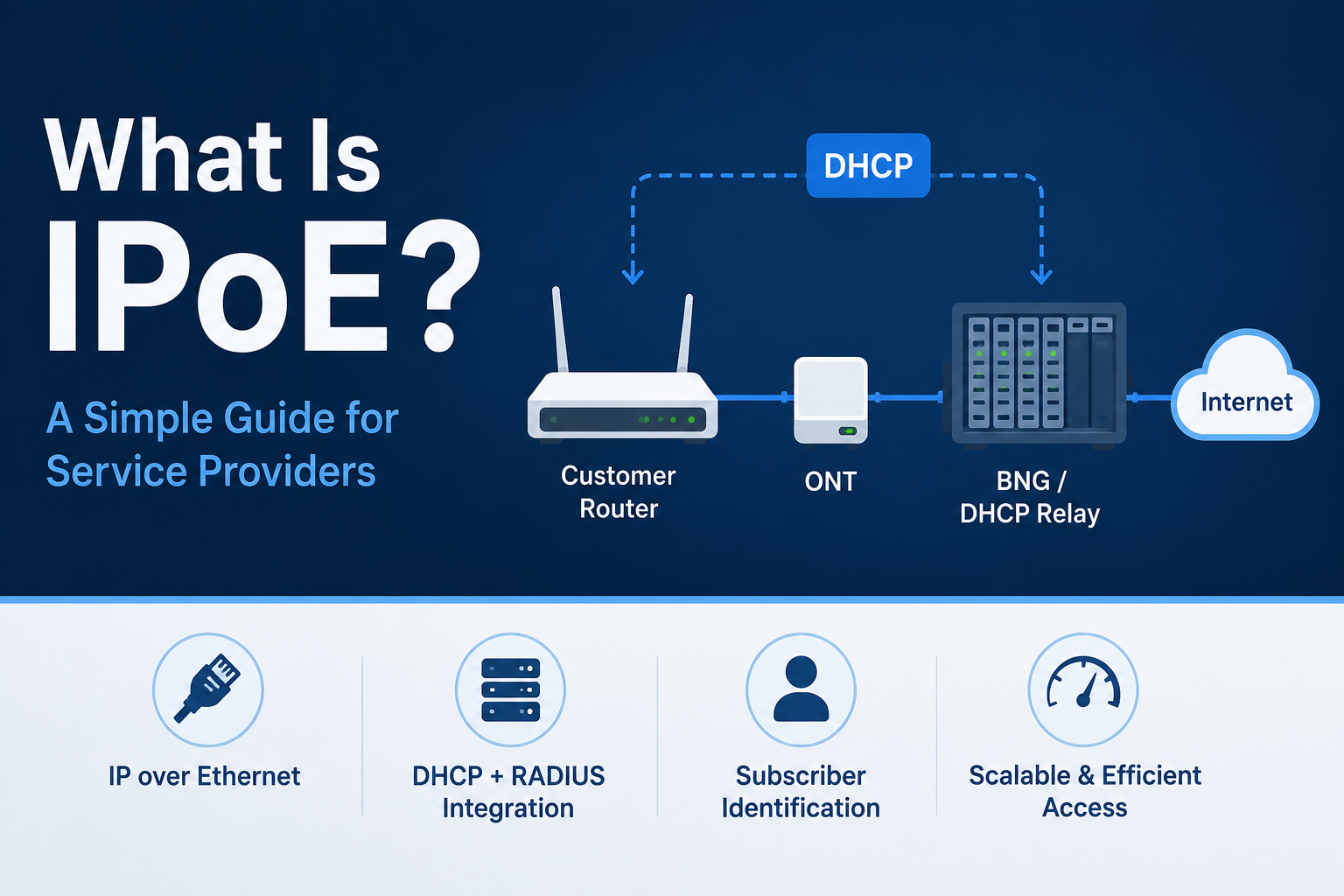
Now along comes IPoE. IPoE stands for IP over Ethernet. Instead of building a PPP session between the customer and the Broadband Network Gateway (BNG), the customer communicates directly over Ethernet. The router sends a DHCP Discover packet, the DHCP server or BNG responds, and the customer receives an IP address along with the other network information needed to reach the Internet.
There is no PPP session to establish and no username or password stored in the customer’s router. The customer simply connects to the network and begins forwarding traffic.
How Does IPoE Work?
The first packet from the customer’s router is usually a DHCP Discover broadcast. That packet crosses the access network until it reaches a DHCP relay or the BNG. The relay can insert information about where the request originated before forwarding it to the DHCP server.
The DHCP server uses that information to determine which customer is requesting service. It assigns an IP address, default gateway, DNS servers, and lease time. Once the customer accepts the lease, normal IP traffic begins flowing across the connection.
From that point forward, the customer’s router simply behaves like any other Ethernet device connected to an IP network.
How Does the Network Know Which Customer Is Which?
A PPPoE network identifies subscribers with a username and password during the authentication process. IPoE relies on information that already exists in the access network.
Depending on the provider, the information might include:
- The customer’s VLAN
- The physical access port
- DHCP Option 82
- Circuit ID
- Remote ID
- The ONT serial number
- MAC address authentication
For a fiber provider, the access network already knows which ONT is connected to each PON port. That often makes a separate PPP login unnecessary because the subscriber can already be identified by the circuit itself.
Why Many Fiber Providers Prefer IPoE
PON and Active Ethernet networks naturally fit the IPoE model. Every subscriber already connects through a dedicated logical service, whether that is a VLAN, GEM port, or another access technology. The access network provides enough information to identify the subscriber before an IP address is ever assigned.
That eliminates one more protocol that has to be configured and maintained. Customer routers can use a standard DHCP configuration instead of requiring PPPoE credentials, which also reduces support calls when someone replaces a router.
It’s all about the MTU
One advantage you quickly notice is the MTU. Ethernet normally carries a 1500-byte payload. PPPoE adds an 8-byte header, reducing the usable MTU to 1492 unless the network supports larger Ethernet frames. VPN tunnels often expose MTU problems because they add their own encapsulation on top of PPPoE.
IPoE keeps the standard 1500-byte Ethernet MTU. That removes one variable when troubleshooting VPN connectivity or applications that depend on larger packets.
Does IPoE Still Support Authentication?
The authentication simply happens differently. Many providers combine DHCP with RADIUS. When a customer requests an address, the DHCP server can send subscriber information to RADIUS. RADIUS returns the policies that should be applied to that subscriber, such as the assigned IP address, bandwidth profile, VLAN, or other service attributes.
Is IPoE Better Than PPPoE?
Neither protocol makes the Internet faster by itself. Both can deliver gigabit and multi-gigabit broadband services. The biggest differences are from an operational standpoint.
PPPoE requires every subscriber to establish and maintain a PPP session. IPoE removes that session and relies on Ethernet and DHCP instead. The BNG no longer has to maintain PPP state for every subscriber, and customers do not have to enter PPP credentials into their routers. PPPoE also adds that extra bit of overhead I mentioned earlier.
Final Thoughts
If you deploy FTTH, XGS-PON, or Active Ethernet services today, there is a good chance your network already contains everything needed to identify subscribers without PPP. IPoE takes advantage of that information and uses standard Ethernet and DHCP to bring customers online. In my next article I will explain iPoE vs DHCP.
j2networks family of siteshttps://j2sw.com
https://startawisp.info
https://indycolo.net
#packetsdownrange #routethelight
Discover more from Justin Wilson (j2sw)
Subscribe to get the latest posts sent to your email.