
j2sw.com updated

j2sw.com has a new look! It was time for a refresh and a better way to bring my projects, writing, and other corners of the Internet together. The updated homepage includes my book, Kid’s First Visit to an Internet Exchange, links to Packets DownRange, and a media section with YouTube, Patreon, and my Amazon Author … Read more

J2 Networks Joins MANRS to Strengthen Internet Routing Security

J2 Networks joins MANRS — connected globe illustrating Internet routing security

J2 Networks joins MANRS, the Mutually Agreed Norms for Routing Security initiative, reinforcing our commitment to a more secure Internet. MANRS is a global initiative that helps reduce common Internet routing threats through practical actions and cooperation among network operators. Joining this community reinforces our commitment to responsible network operations and a more resilient Internet. … Read more

Keep the Packets flowing

Three in the morning, another alarmSomething went down, time to bring it back onlineRouters are screaming, the logs are redAnother long night in the data center ahead

Securing MikroTik Management with Cloudflare Zero Trust (Part 1)

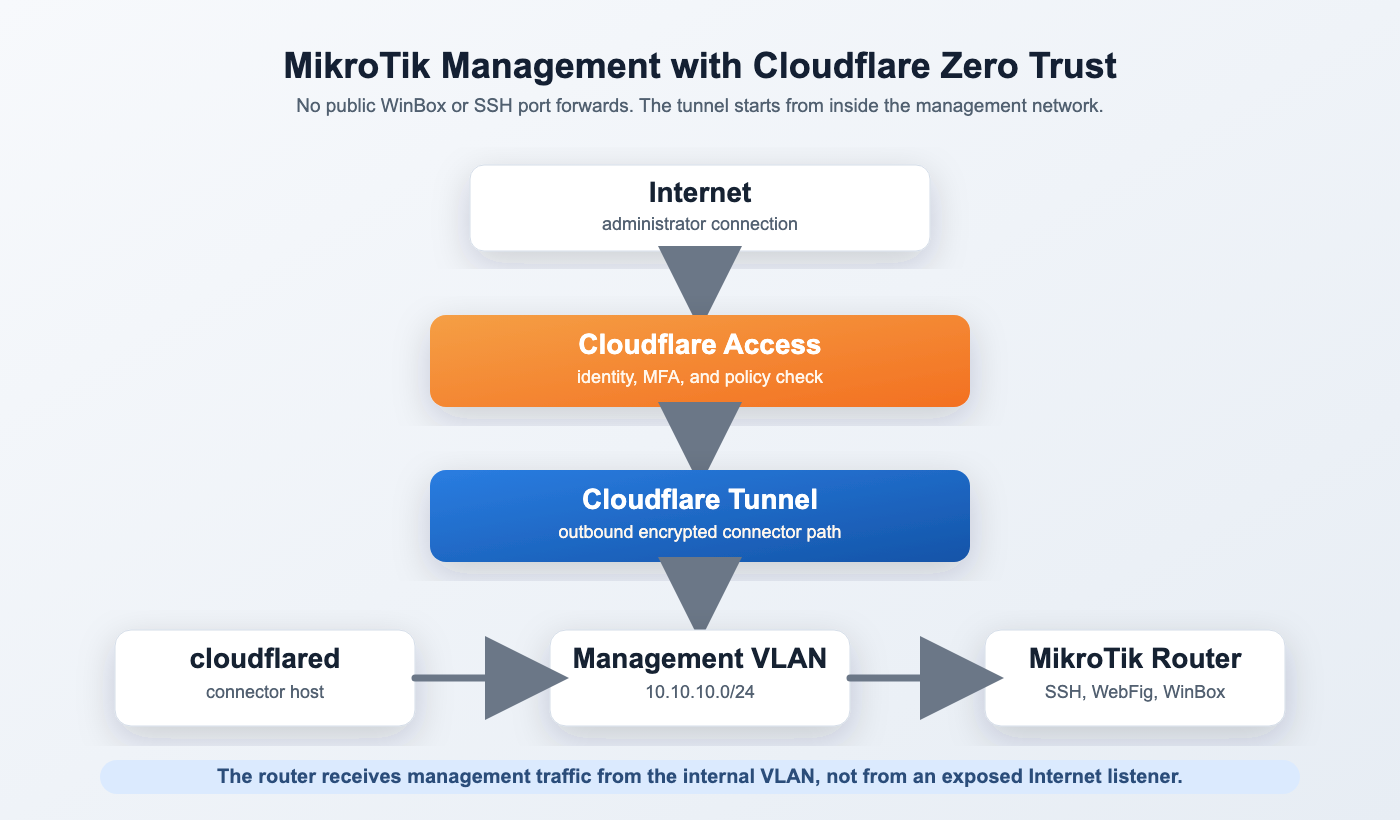
Architecture diagram for managing a MikroTik router through Cloudflare Zero Trust, Cloudflare Access, Cloudflare Tunnel, cloudflared, and a management VLAN.

I, due to recent SSH vulnerabilities in MikroTik, figured this series of articles would be relevant. The router may have strong passwords and firewall filters, but those services still receive constant login attempts from automated scanners. For years, the normal answer was a VPN with a management network. VPNs work well, but they require another … Read more

BGP MED: Controlling Which Entry Point Another Network Uses

Let’s look at another BGP attribute, the Multi-Exit Discriminator, or MED. Two networks may interconnect in more than one location, and MED lets you attach a preference to the routes you advertise. An ISP might connect to the same upstream in Indianapolis and Chicago while advertising the same prefixes at both locations. The upstream now … Read more

Mikrotik 7.23/7.24 and LTE

The following is from the 7.23.7 changelog. What’s new in 7.23.7 (2026-09-16): *) lte – prevent the modem firmware from being deleted for RBSXTLTE3-7, EC25-EU&KNe, EG25-G&KNe, EC25-EU&SXTsq, EG25-G&SXTsq (introduced in 7.23.6); If you have already upgraded to 7.23.6 or 7.24.3, follow these steps to restore LTE functionality on affected devices: For more details, see:https://forum.mikrotik.com/t/warning-lte-interface-stops-working-after-upgrade-to-7-23-6-7-24-3

A first-hand forensic walkthrough of a real router compromise

What it looks like when an intruder tries to make your own router work against you. A note before we start: Anything in this post that could identify my network, my organization, or my router’s real hostname and IP address has been redacted or made generic. The attacker’s own infrastructure, such as IP addresses, ports, … Read more

An open Letter about the implosion of Cambium Networks

To the product teams, support organization, partners, and remaining employees of Cambium Networks: First and foremost, my heart goes out to you during these tough, uncertain times. Over the past couple of years, Cambium has taken a beating in the forums and groups. Those of us who understand how the world works always knew that … Read more

What N, N+1, 2N, and 2(N+1) Mean in a Data Center

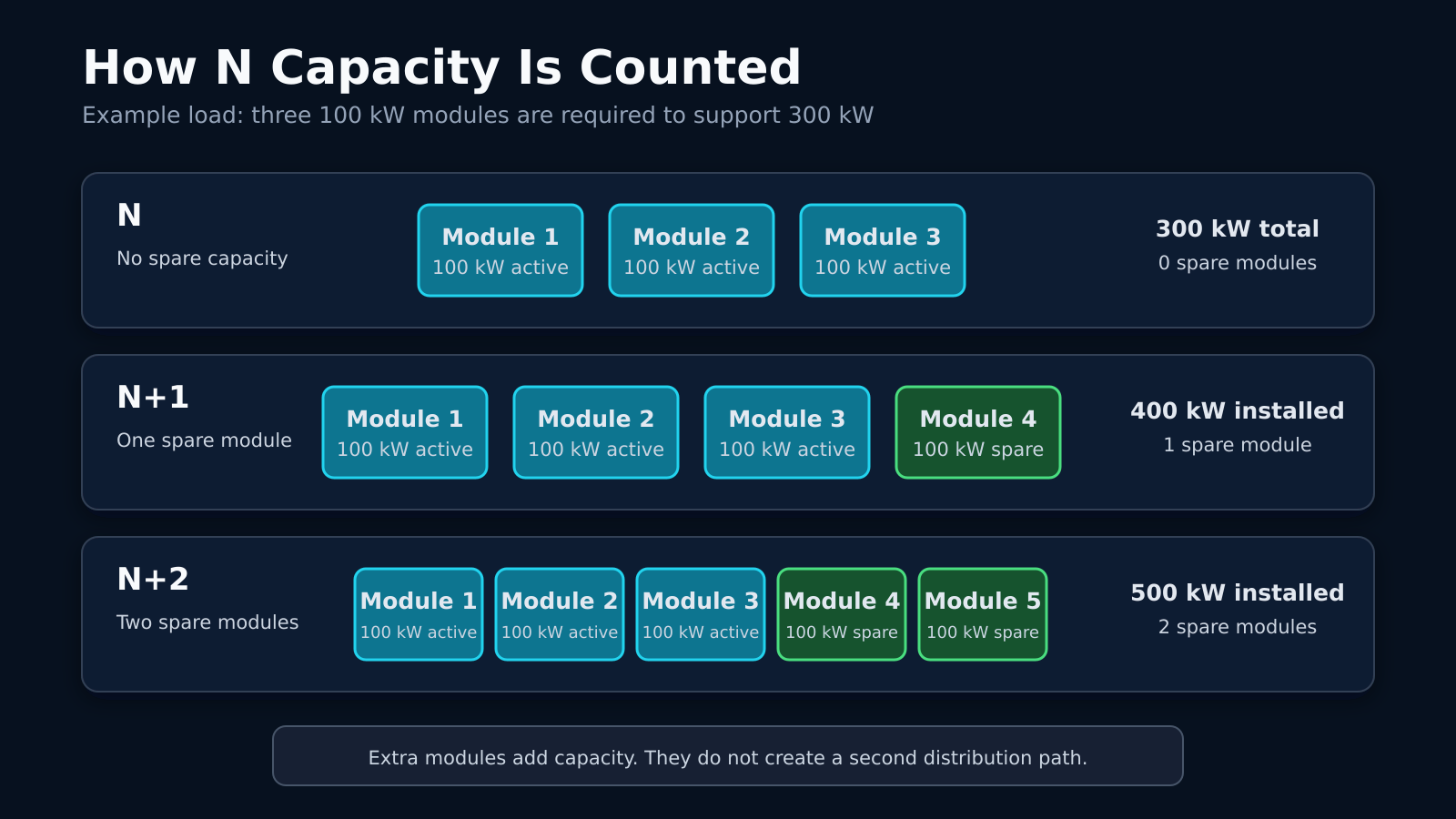
Diagram comparing N, N+1, and N+2 data center capacity

Have you ever looked at a data center marketing slick and wondered what N, N+1, 2N, and 2(N+1) actually mean? The main thing they tell you is how many components can fail before the system drops below the capacity needed to support the load. When I evaluate a data center, I want to know what … Read more