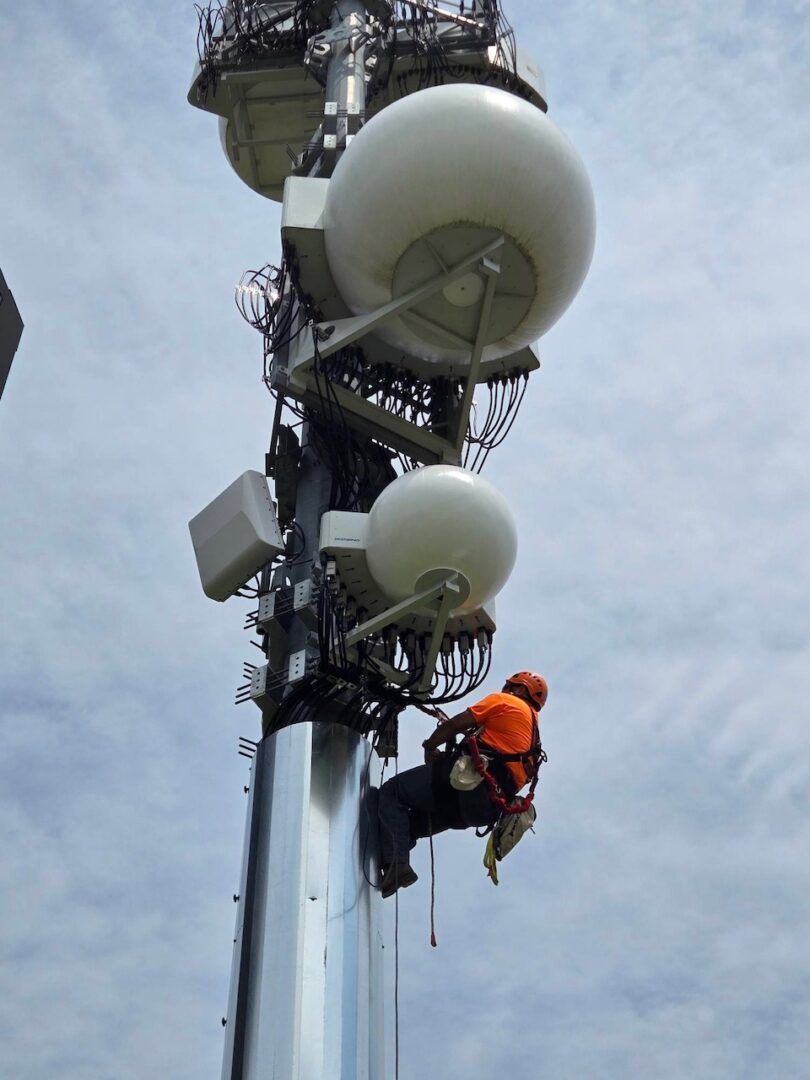
A little off the beaten path on this one. We are diving into a big part of a Cellular tower deployment. Many sites now use an Active Antenna Unit, or AAU. The radio and the antenna are built into the same enclosure.
An AAU combines the antenna, radio transceivers, power amplifiers, and low-noise amplifiers into a single unit mounted near the top of the tower. Fiber and power run up the tower instead of large bundles of coaxial cable. That cuts RF loss because the radio is only a few inches away from the antenna elements instead of hundreds of feet away through coax.
The fiber connection between the baseband unit and the AAU carries digital data instead of RF. The AAU converts that data into radio signals and transmits it over the air. On the receive side, it converts the incoming RF back into digital data before sending it to the baseband equipment. Less signal loss means the power amplifiers do not have to overcome long cable runs before the signal reaches the antenna.
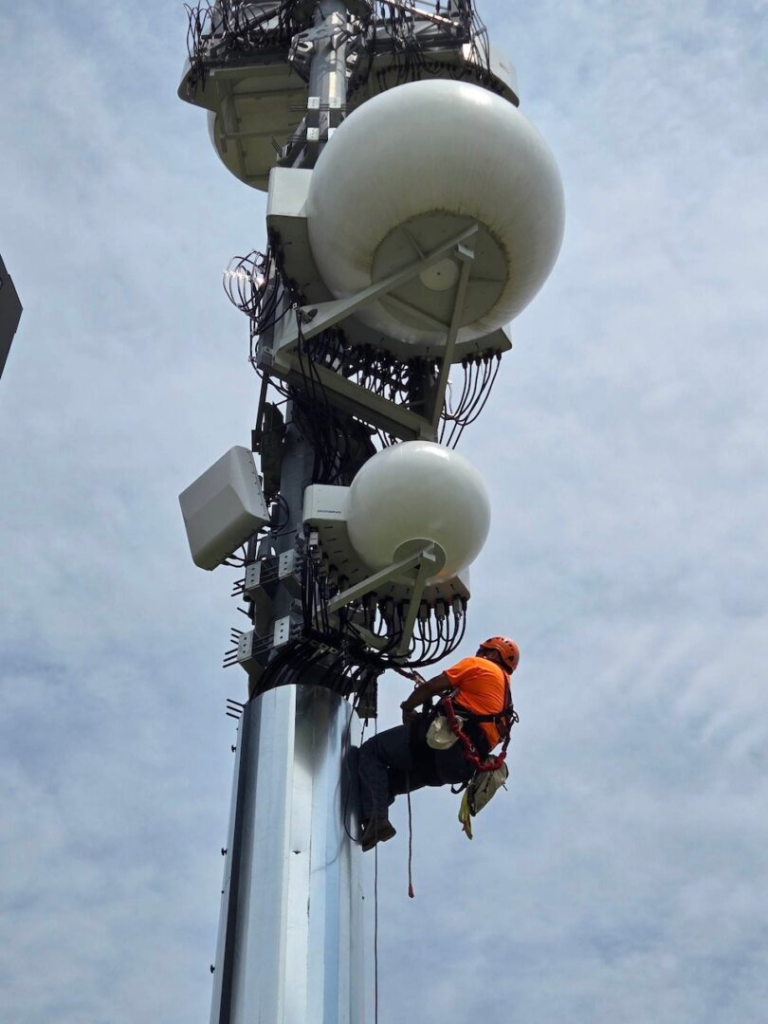
AAUs also make technologies such as Massive MIMO practical. Instead of a few transmit and receive paths, an AAU may contain dozens or even hundreds of antenna elements. The radio can steer beams toward individual users instead of broadcasting energy equally in every direction. More of the transmitted power reaches the intended device, improving spectrum efficiency and increasing capacity within the same licensed frequencies. Imagine antennas that can direct signals in a sporting event or concert.
The installation process changes as well. A traditional cellular site might have separate antennas, remote radio heads, jumpers, and long coax runs that all need to be mounted and tested. An AAU reduces much of that hardware into a single assembly. The unit is heavier than a passive antenna, so tower crews need to account for factors such as weight when installing.
AAUs have become a common part of 5G deployments because they improve RF performance while reducing the amount of analog cabling on the tower. The hardware costs more than a passive antenna, but the shorter RF path and support for advanced antenna technologies make that tradeoff worthwhile for many cellular networks.
j2networks family of siteshttps://j2sw.com
https://startawisp.info
https://indycolo.net
#packetsdownrange #routethelight
Discover more from Justin Wilson (j2sw)
Subscribe to get the latest posts sent to your email.