
The Benefits of Running Border Gateway Protocol (BGP) in Your Network
1. Dynamic Routing and Scalability BGP’s ability to handle large and diverse networks makes it an ideal choice for scaling operations. It dynamically learns and adapts to changes in network topology, enabling efficient routing decisions in complex and evolving environments. Whether managing a small enterprise network or a global ISP, BGP’s scalability accommodates diverse network … Read more

iBGP vs eBGP: Understanding the Differences

Interconnection

In the intricate world of routing protocols, the Border Gateway Protocol (BGP) stands as a pillar, facilitating the exchange of routing information between different networks on the internet. Within BGP, two fundamental variations exist: Internal BGP (iBGP) and External BGP (eBGP). Both serve distinct purposes in managing routing within and between Autonomous Systems (ASes). Internal … Read more

Understanding the BGP No-Export Attribute

The “no-export” attribute in BGP is a configuration option applied to specific routes to restrict their propagation beyond an autonomous system’s (AS) boundaries. In the realm of BGP, ASes are individual networks or a collection of IP prefixes under a single administrative domain, and BGP facilitates the exchange of routing information between these ASes. How … Read more

Understanding the BGP Origin Code Attribute

Interconnection

Understanding the BGP Origin Code Attribute The BGP Origin Code is a mandatory attribute attached to BGP routes, indicating the origin of a particular route in the BGP table. It specifies how a route was introduced into BGP and provides crucial information about its source. There are three possible origin codes: Significance of the Origin … Read more

What are Border Gateway Protocol Attributes and examples?

Interconnection

What are Border Gateway Attributes, what are they, how do they work, and their significance in shaping internet routing. What Are BGP Attributes? In the context of BGP, attributes are pieces of information associated with each route in the BGP routing table. These attributes provide BGP routers with crucial details about network paths and help … Read more

What is BGP next-hop-self and why you should care?

In this blog post, we’ll demystify the concept of next-hop-self in BGP, why it’s crucial, and how it affects routing decisions. What Is Next-Hop-Self in BGP? In BGP, the “next hop” is the IP address used to reach a particular network or destination. The “next-hop” IP address is vital for making routing decisions and forwarding … Read more

Packets Down Range #23:Events, new backbone routes, data center fire

Patreon Edition is available here Data Center News •Databank starts construction on ATL4. . The colocation facility will feature 200,000 square feet of raised floor space and four megawatts of power. •Don’t let a tree cause an outage for your Data Center. •DartPoints acquires Louisiana provider Venyu. Data center provider DartPoints has acquired Louisiana-based Venyu … Read more

Problems with Borger Gateway Protocol (BGP)

Border Gateway Protocol (BGP) is the Internet’s dominant inter-domain routing protocol, and as such, it is a critical component of the Internet’s infrastructure. However, BGP, like any other technology, has flaws. The following are some of the most common BGP issues: Some of the above issues are being addressed with RPKI, Routing Registries, and MANRS, … Read more

Packets Down Range #13:Acquistions and other news

One of the most incredible things this week is the updates to the cloud flare speed test. Lots of things were analyzed, with a lot of questions on why. I will have a blog post separately about this. Sponsor ISP News•WANRACK to acquire KwikCom. WANRack, LLC (“WANRack”), a national leader of custom fiber optic network … Read more

The Mess we call BGP

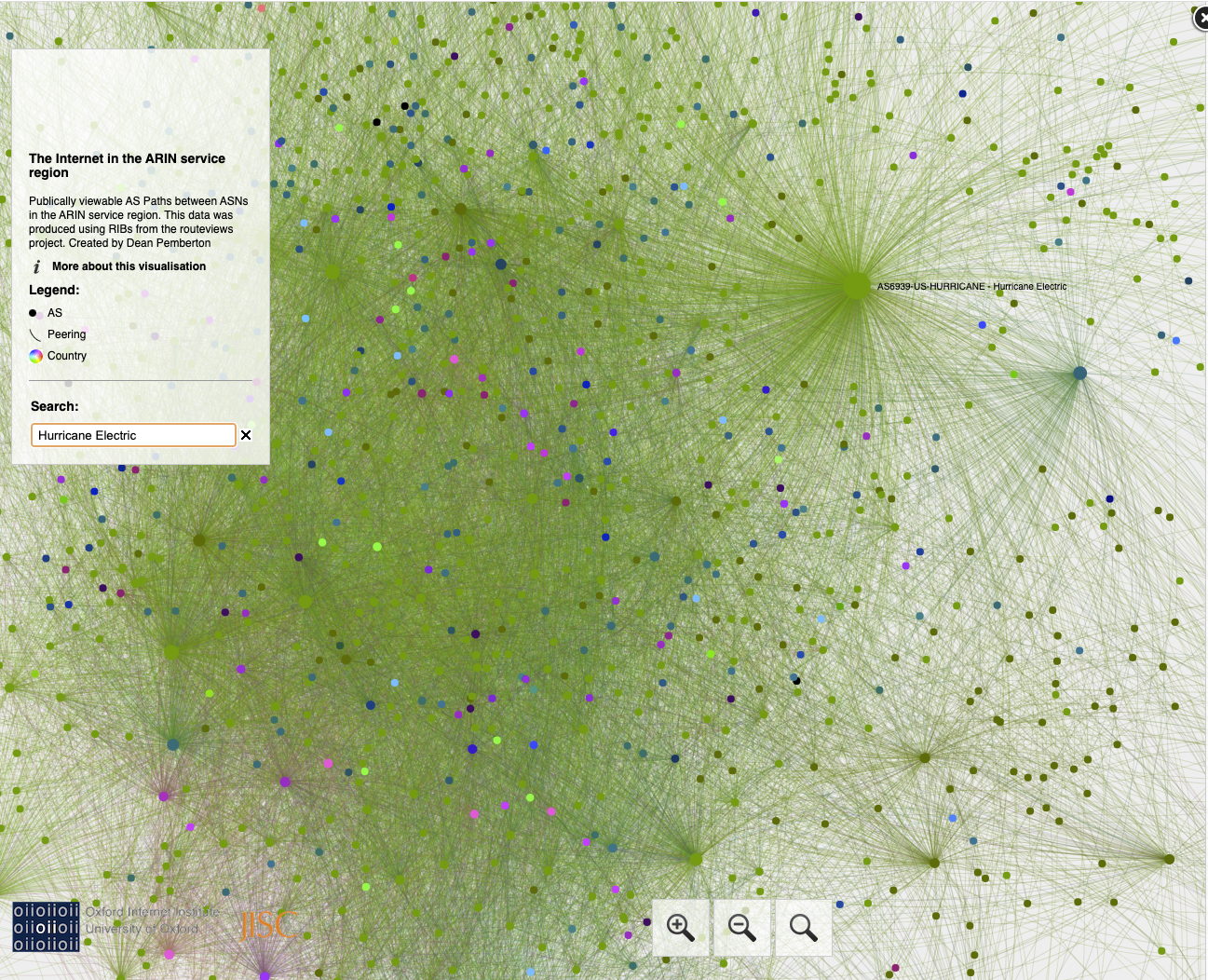
Ever wonder why BGP seems to be such a complicated protocol to administer? It seems pretty straightforward to set up. Some commands, and you have a BGP session. Easy huh? BGP is one of those things where the more BGP feeds you bring in, the more complex traffic management becomes. Why? Take a look at … Read more