
This is part one of my series on Modern Internet Service Providers (ISPs).
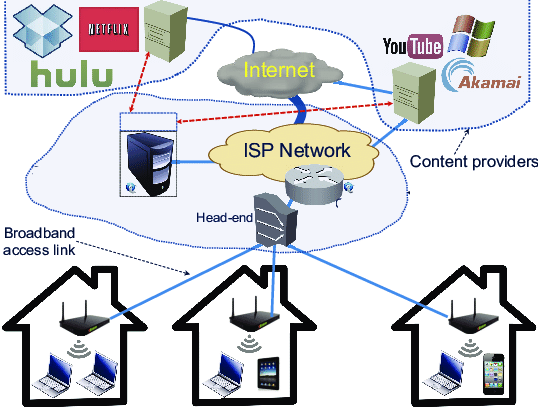
The three-tier model of core (edge), distribution, and access remains the foundation of ISP network architecture, though the distinctions between these layers have become less defined. A current assessment requires analysis beyond standard diagrams.
The Core (aka Edge): Backbone and Interconnection
The core network, or as I like to call it, the Edge, supports high-capacity routing and long-haul transport. Modern ISP backbones use dense fiber infrastructure with routers that support multi-terabit throughput per chassis. The edge links major Points of Presence (PoPs) and terminates at Internet Exchange Points (IXPs) and Data Centers, where peering with other autonomous systems occurs.
Peering strategy is a critical decision for ISPs, directly influencing network performance. Peering at major IXPs lowers transit costs but creates dependencies on the capacity and reliability of those exchanges. An effective edge architecture offers diverse paths and sufficient capacity to manage traffic shifts if a peering link degrades.
The core network is now as much about interconnection strategy as transport. Peering decisions directly affect all performance metrics experienced by subscribers.
Distribution and Aggregation
The distribution layer aggregates traffic from access networks and enforces policies such as QoS, traffic engineering, and subscriber management. MPLS label-switched paths, and increasingly Segment Routing with SR-MPLS or SRv6, provide greater traffic engineering flexibility than static routing. Your customer natting is also done at this layer. Whether it be traditional natting or things like 6to4.
In recent years, the number of services required at this layer has increased significantly. Simple aggregation and forwarding are no longer sufficient. Subscriber-aware policy enforcement, DDoS mitigation at the aggregation point, and service chaining for value-added offerings all compete for processing resources. The distribution layer is now the most operationally complex part of many ISP networks and is often where scaling issues first appear.
The Access Layer: Last Mile Realities
The access layer features the greatest technology diversity. Active Ethernet, GPON and XGS-PON for fiber-to-the-premises, DOCSIS 3.1 and 4.0 for hybrid fiber-coax, and fixed wireless access using CBRS, unlicensed or licensed spectrum, each present unique capacity planning and management challenges.
The access layer is critical to subscriber experience. Even a well-designed core cannot compensate for congestion, misconfiguration, or poor monitoring in the last mile. With remote work now common, residential access links carry traffic patterns once limited to enterprise circuits. The access layer is where most things happen. Customers do weird things like plugging in cables backwards, which has been the same way for years. The modern ISP must have enough systems in place to stay one step ahead of the customer.
In future posts I will expand on what each of these do and why they are important.
j2networks family of siteshttps://j2sw.com
https://startawisp.info
https://indycolo.net
#packetsdownrange #routethelight
Discover more from Justin Wilson (j2sw)
Subscribe to get the latest posts sent to your email.