
Wireless signal fade happens when the radio signal drops in strength or quality. Distance, weather, interference, and physical obstructions all play a role. Even small changes matter. Water absorbs RF energy. Heat affects signals. Trees grow. The result is a lower signal-to-noise ratio, higher error rates, and retries that pile up fast.
Here is the tricky part. A fading link often stays “up” at Layer 1 and Layer 2. Ethernet stays lit. The radio still passes frames. From a router’s point of view, nothing is broken. Users feel it though. Latency spikes, packets drop, and voice or video falls apart.
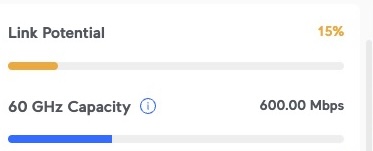
The above screenshot illustrates this on a 60GHZ link. The link is alive but the quality is pretty poor. The routers on both sides still see this link as active. They do not know how bad the quality of the link is.
Some wireless radios handle this in a smarter way. When the signal drops below a safe threshold, the radio shuts down the Ethernet interface. This sounds harsh, but it is a gift to the rest of the network.
Why this helps:
- The router sees the interface go down.
- Routing protocols react right away.
- Traffic moves to a better path instead of limping along.
With a protocol like OSPF, this behavior matters a lot. OSPF does not measure “bad” links well. It mostly reacts to links that are up or down. By dropping Ethernet when RF quality gets too low, the radio turns a bad path into a clear failure. OSPF can then converge and send traffic elsewhere. This approach avoids a common failure mode where traffic sticks to a poor wireless link because, technically, it never went down.
A few practical notes from the field:
- Look for radios that support Ethernet down or port disable on low signal.
- Set thresholds carefully. Too aggressive causes flaps. Too loose keeps bad paths alive.
- Pair this with sane OSPF timers so convergence stays fast but stable.
- Monitor RSSI, SNR, and error rates, not just link state.
Wireless fade is not always dramatic. It is often slow and sneaky. Designing for clean failure beats hoping a weak link behaves itself. In networking, honesty is a virtue. If a path cannot carry traffic well, it should say so clearly and step aside.
j2networks family of siteshttps://j2sw.com
https://startawisp.info
https://indycolo.net
#packetsdownrange #routethelight
Discover more from Justin Wilson (j2sw)
Subscribe to get the latest posts sent to your email.