

Does IPv6 finally have the “killer app” when it comes to use in AI? Service providers see the benefits of IPV6, but many other industries do not. We all know IPv4 is still widely used because NAT has enabled providers to stretch their limited address space across large subscriber bases. Residential traffic is bursty. A customer opens Netflix or checks email, then the translation entry eventually ages out once the application is done with that connection. Carrier-grade NAT (CGN) will constantly recycle ports across addresses because traffic patterns behave more like temporary client activity than persistent infrastructure communication.
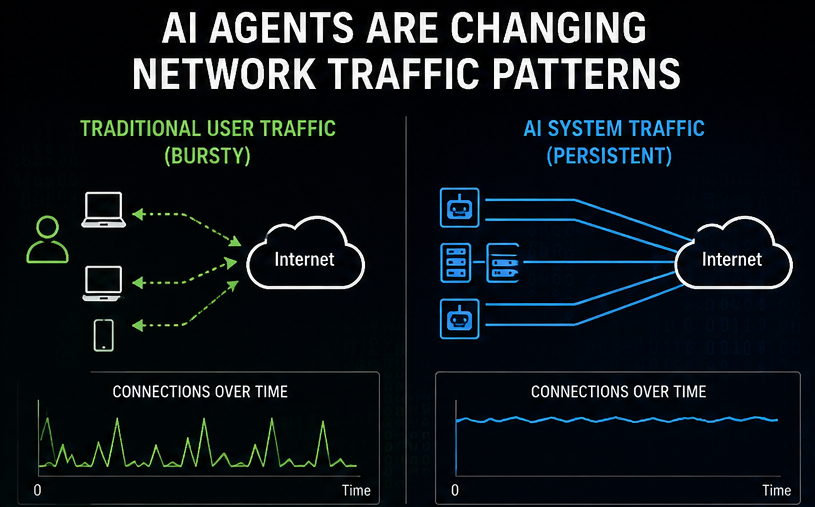
AI systems change the way customer connections behave, making them less bursty. One local AI platform may maintain persistent API sessions to the cloud. Another continuously polls routers within the network for telemetry data. A monitoring agent may keep active connections open to systems 24/7 rather than creating temporary sessions that disappear after a few seconds. Translation entries remain active much longer once systems begin communicating continuously rather than the occasional burst.
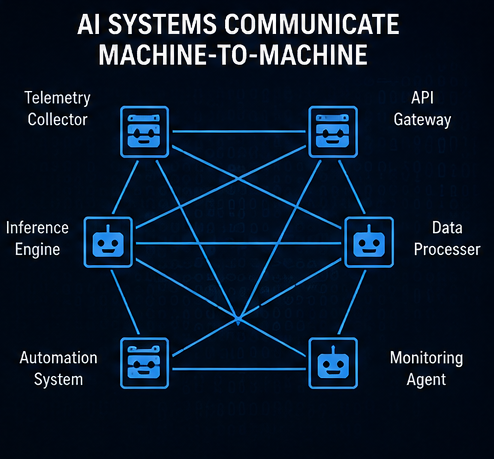
Connection density increases quickly once multiple AI systems begin operating inside the same environment. An ISP user with a home lab may have local AI models tied into automation systems while also keeping active sessions to external APIs. A wireless ISP may deploy AI agents at tower sites to analyze spectrum data across hundreds of locations. A regional data center may deploy local systems directly connected to telemetry collectors, which creates a large number of persistent east-west and north-south sessions simultaneously.
Carrier-grade NAT infrastructure starts carrying far more persistent state once those traffic patterns scale. Residential browsing traffic rotates translation entries throughout the day because users constantly open and close applications. AI systems commonly maintain large numbers of simultaneous sessions to handle requests, keeping translation tables populated for much longer periods. Logging systems also become harder to manage because abuse reports and flow telemetry now require large NAT correlation datasets used to identify the actual endpoint involved.
Troubleshooting also becomes more complex once overlays start compensating for the limitations of IPV4. Engineers may deploy reverse tunnels to enable AI platforms behind NAT. Packet captures become harder to follow because translated addresses sit between endpoints. Firewall policies become more difficult to audit when hundreds of systems are behind a shared IP address space. Those workflows quickly add costs once AI traffic begins scaling across large deployments.
IPv6 removes much of that complexity by eliminating the address conservation problem. Service Providers can delegate large IPv6 prefixes to customers instead of forcing them behind CGNAT. AI systems can maintain globally routable addresses across locations without depending on translation layers sitting in the middle. Flow telemetry and firewall logs also map directly back to endpoints rather than to temporary NAT translations. This significantly improves troubleshooting and compliance. This also improves performance. Nat functions take horsepower to work.
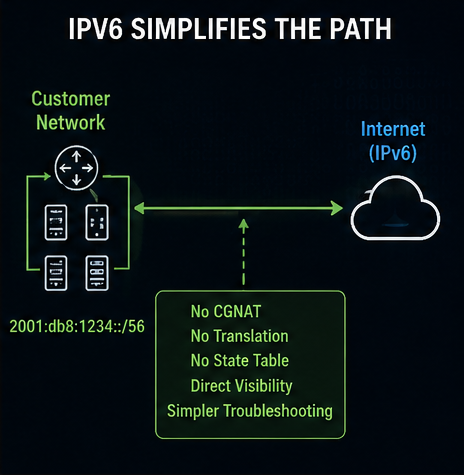
AI traffic patterns fit IPv6 much better because the protocol was designed from the beginning for large-scale endpoint addressing. Streaming video significantly increased bandwidth consumption, but most traffic still behaved like traditional client sessions, with relatively short-lived states. AI systems increase persistent sessions, endpoint counts, and machine-to-machine communication simultaneously, pushing far more long-lived state into the translation tables. At some point, maintaining a large-scale NAT infrastructure for those traffic patterns becomes harder than just deploying IPv6 correctly.
j2networks family of siteshttps://j2sw.com
https://startawisp.info
https://indycolo.net
#packetsdownrange #routethelight
Discover more from Justin Wilson (j2sw)
Subscribe to get the latest posts sent to your email.