
In this article
Welcome to Part two of My ISP series. In Part 1, I went over what an Internet Service Provider (ISP) is.
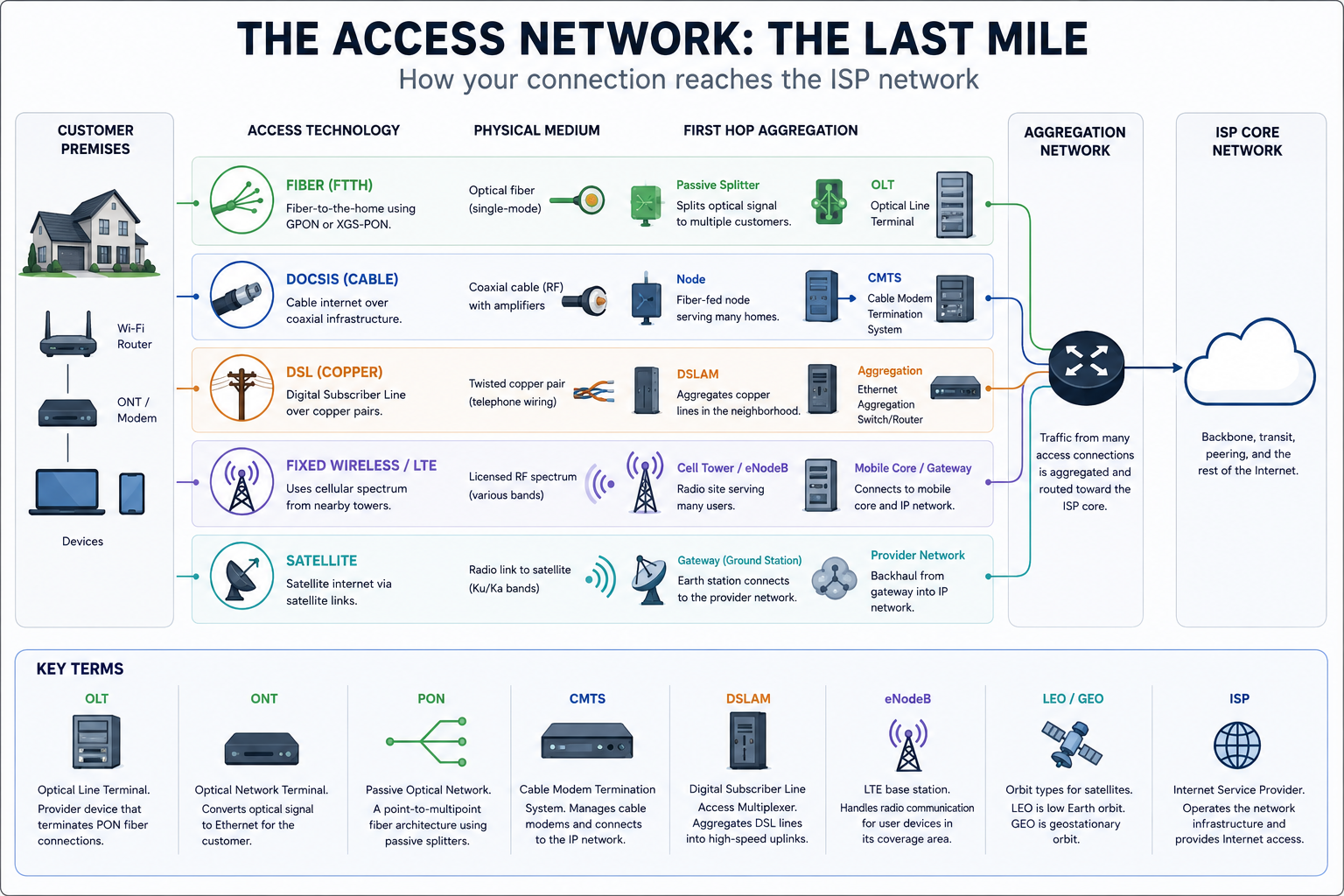
Fiber, DOCSIS, DSL, Fixed Wireless, Satellite, and LTE are each ways to get subscriber traffic into the ISP network in their own way. Fiber relies on passive optical splitters. DOCSIS uses shared RF channels over coax. Fixed wireless moves data over the air with antennas. Satellites beam signals into space and back. No matter the method, all of them end up feeding aggregation routers deeper in the provider network. From there, the ISP sends packets upstream to eventually reach the Capital I internet.
In fiber networks, the signal passes through passive optical splitters back to an Optical Line Terminal (OLT) located in a roadside cabinet or an ISP facility. DOCSIS sends data over shared coax to cable nodes. Fixed wireless brings traffic from customer radios up to access points. DSL uses copper pairs that land in a DSLAM. The end goal for all of these is simple: get Internet to the customer.
Fiber to the Home (FTTH)
Most fiber-to-the-home setups use GPON or XGS-PON to serve lots of customers. GPON is short for Gigabit Passive Optical Network. XGS-PON is the newer version and bumps speeds up to 10 Gbps both ways.
On the provider side, there’s an Optical Line Terminal, or OLT, sitting in the ISP’s facility. This is where all the subscriber fibers come together. From the OLT, fiber runs out into the field, and passive splitters branch the signal out to multiple customers.
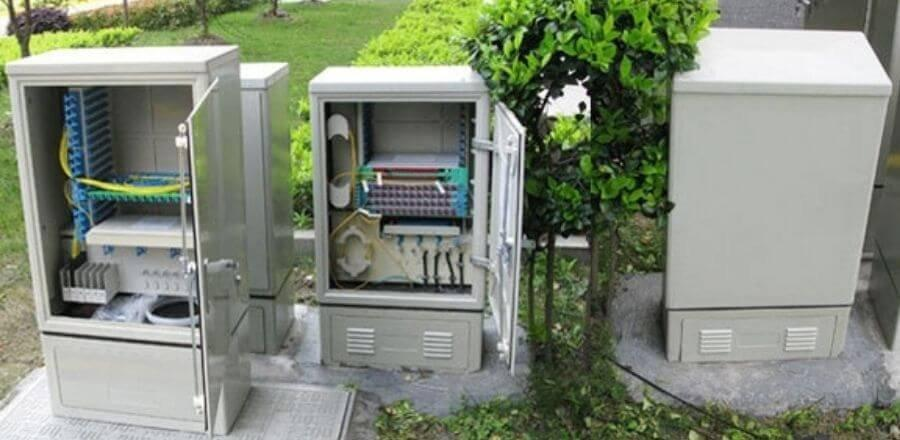
A passive splitter just splits light into several fiber paths. It doesn’t need power and doesn’t look at any packets. Depending on the setup, one fiber from the OLT might split out to 16, 32, or even 64 customers. At the customer end, the fiber lands at an Optical Network Terminal (ONT), which turns the optical signal into Ethernet for the customer’s router or other gear.
The ONT at the customer site turns light into Ethernet. Once traffic hits the provider’s OLT, it gets passed to aggregation switches or broadband gateways. Things like VLANs, PPPoE, or DHCP policies tag and identify each subscriber and set their service profile. From there, it’s just regular routed Ethernet traffic.
DOCSIS Networks
DOCSIS, which is what most cable companies use, works a bit differently. Here, your cable modem tunes into RF channels over coax. These channels are just different frequencies on the cable. Modems talk to a CMTS (Cable Modem Termination System) or sometimes a distributed access platform further in the network. Downstream traffic comes in on certain channels, and upstream goes back on others. The modem is always negotiating parameters like modulation rates and channel assignments with the provider’s equipment
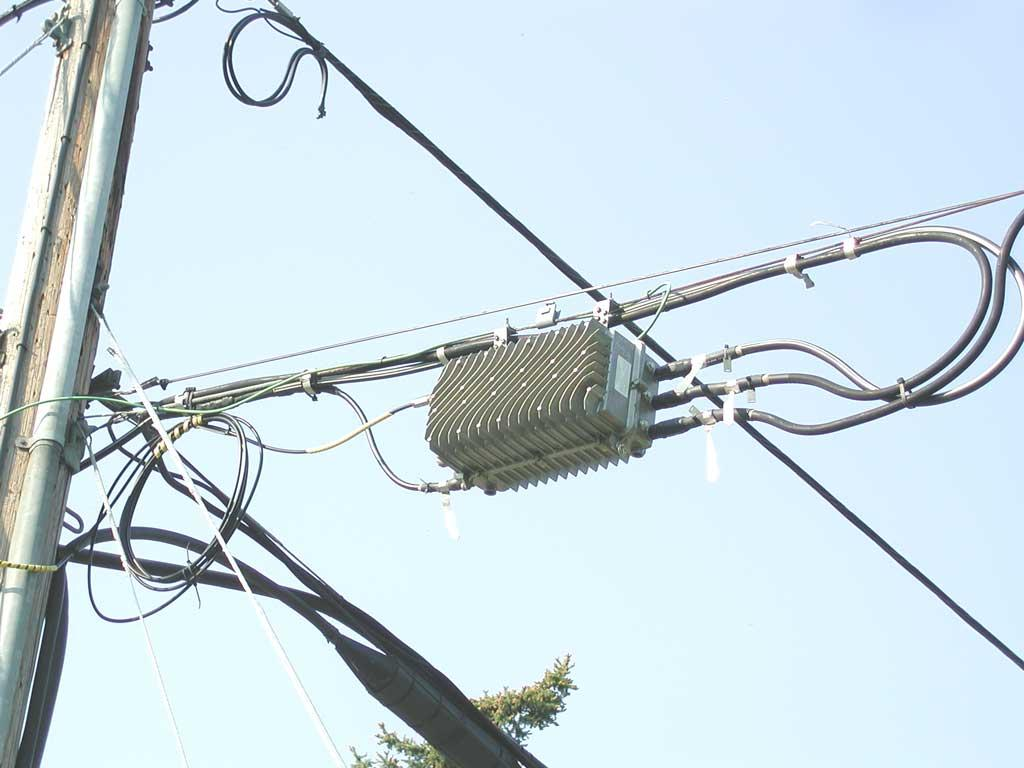
Modern DOCSIS setups use channel bonding to boost speeds. That means several RF channels get combined into one logical connection for the subscriber. DOCSIS 3.1 and 4.0 take it further with OFDM modulation and more spectrum, so cable companies can offer multi-gigabit speeds without ripping out all the old coax.
Fixed Wireless
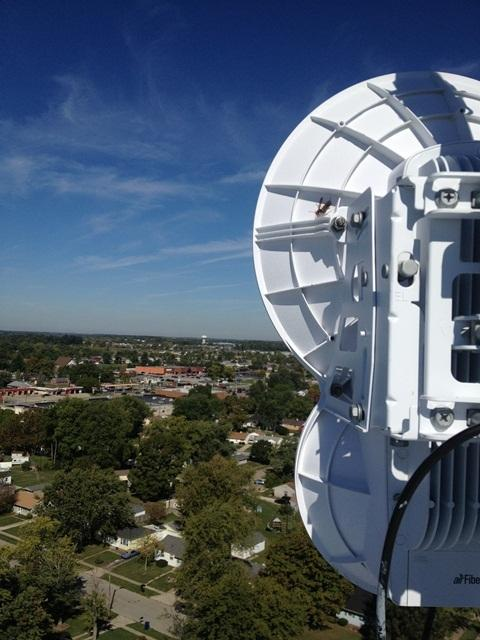
Fixed wireless access (FWA) networks replace physical cable with radio links. Customer radios connect to access points mounted on towers or similar structures. The access point controls how airtime gets allocated between connected customers. The RF environment directly affects performance because signal quality determines modulation rates and retransmission behavior. Sector antennas focus the signal toward the customer, reducing interference. Wireless ISPs spend significant effort on RF engineering. A clean line-of-sight connection can deliver low latency and high throughput. There are entire books written about RF theory and practical uses.
DSL Wireline Access
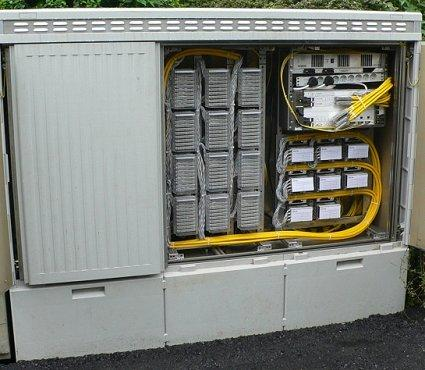
DSL networks still exist heavily in rural telephone areas. They can also be in areas with existing telephone infrastructure, but it is very costly to dig up the ground to install additional cabling. DSL uses copper telephone pairs originally designed for voice service to deliver data services. A DSL modem communicates with a DSLAM located at a central office or remote cabinet. Distance matters a lot because signal quality degrades over longer copper loops due to physics. Short loops may support VDSL speeds while longer loops fall back to ADSL.
Satellite Internet
Satellite Internet sends traffic over radio links between your dish and satellites overhead. At the customer site, you’ll have a satellite modem hooked up to an outdoor dish or a phased-array antenna. Instead of talking to a cell tower or a fiber cabinet down the street, your antenna points straight at the satellite
Traditional satellite providers relied on geostationary satellites sitting about 35,786 kilometers above Earth. Your traffic would go up to the satellite, down to a ground station, across the provider’s network, and then back the same way for return traffic. That distance adds significant latency, since packets have to travel thousands of miles each way.
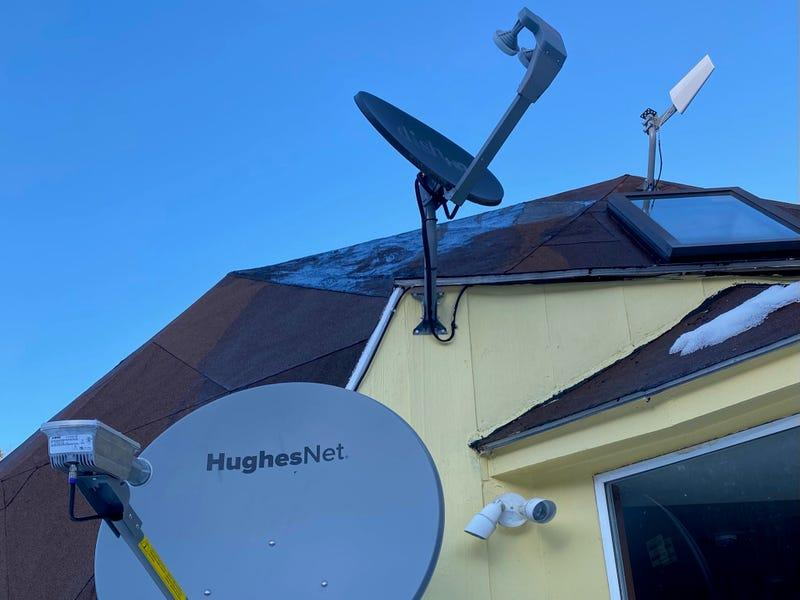
Low Earth Orbit (LEO) satellites, such as Starlink, use large numbers of satellites that orbit much closer to Earth’s surface. These are often at altitudes between roughly 300 and 1,200 kilometers. This reduces round-trip latency substantially compared to geostationary systems. Ground stations connect the satellite network back into terrestrial Internet infrastructure. Once traffic reaches the provider ground station, packets move through normal ISP routing and transport systems just like any other access technology.
LTE and Cellular Internet
LTE networks deliver Internet access over licensed cellular spectrum using radio towers. This is similar to Fixed Wireless. LTE stands for Long Term Evolution and forms the foundation for many mobile broadband and fixed wireless deployments. Customer devices communicate with nearby cellular sectors mounted on towers or rooftops. Modern LTE and 5G systems also use carrier aggregation and multiple-input multiple-output antennas (MIMO) to boost subscriber speeds. One of the big differences between Fixed Wireless and LTE is that LTE normally uses licensed spectrum. LTE also has mobile and stationary users.
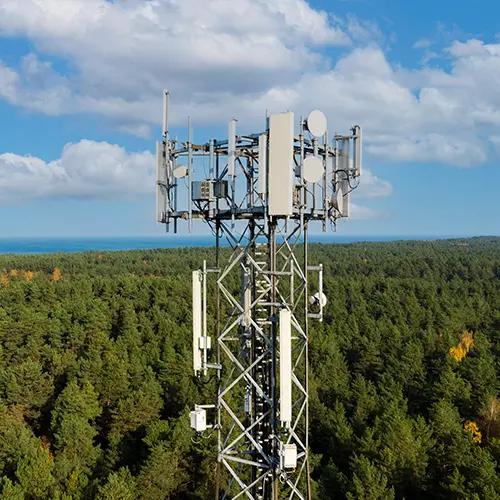
Regardless of access type, subscriber traffic eventually converges into an aggregation infrastructure. Aggregation routers collect traffic from OLTs, CMTS platforms, wireless sectors, or DSLAMs and move it toward the provider core. Subscriber authentication, traffic shaping, accounting, and policy enforcement usually happen near the customer. This becomes the operational handoff point between the access network and the routed ISP backbone.
This part of the network determines much of the customer experience before packets ever touch the Capital I Internet. Signal quality, RF utilization, optical power levels, modulation rates, and aggregation design all affect how traffic enters the provider network. When engineers troubleshoot subscriber performance, the access network is usually the first place they investigate because every customer packet passes through it first.
j2networks family of siteshttps://j2sw.com
https://startawisp.info
https://indycolo.net
#packetsdownrange #routethelight
Discover more from Justin Wilson (j2sw)
Subscribe to get the latest posts sent to your email.