

In this article
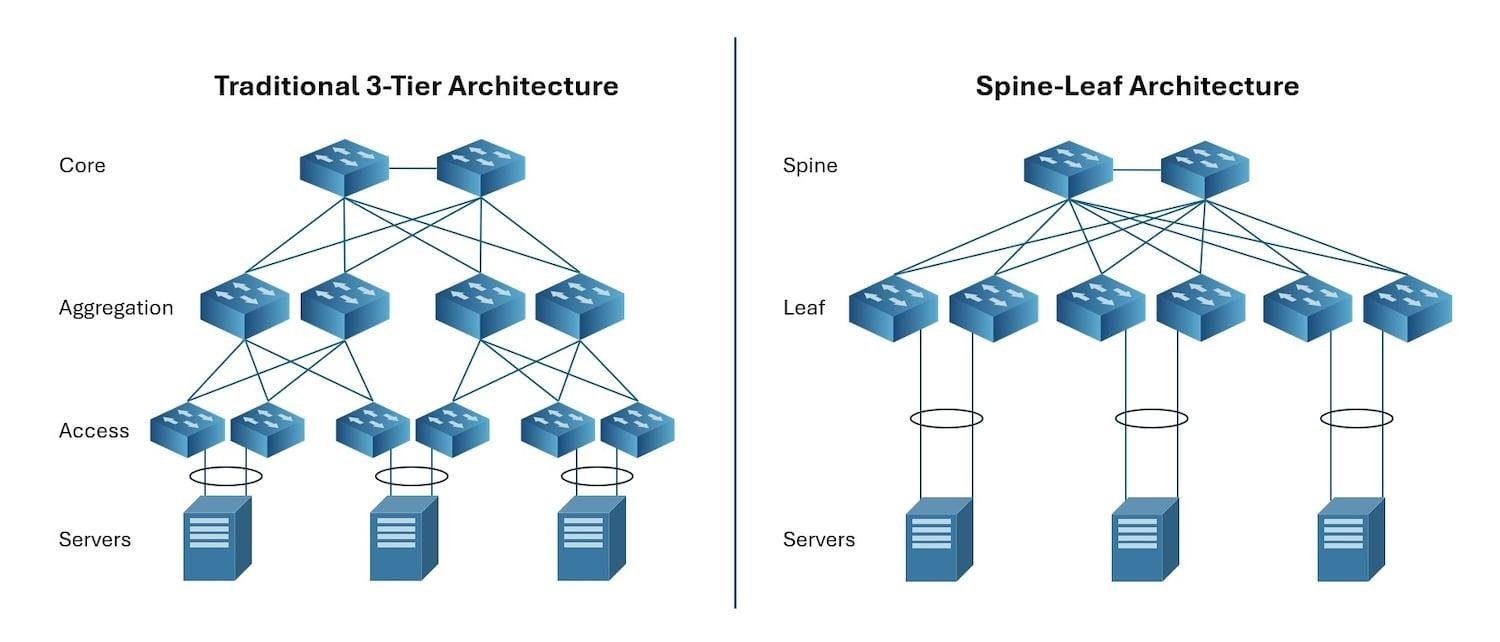
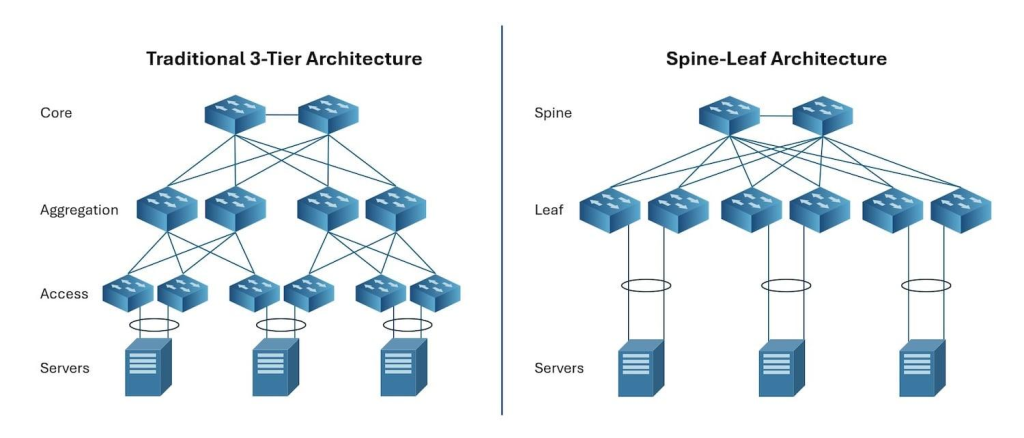
A leaf-and-spine design is a data center network topology that removes the traditional three-tier hierarchy and treats every path equally. Traditional three-tier networks build layers like access, distribution, and core. This structure creates choke points when traffic has to move northbound through specific devices. A leaf and spine fabric flattens that design so every leaf switch connects to every spine switch.
What the Roles Actually Do
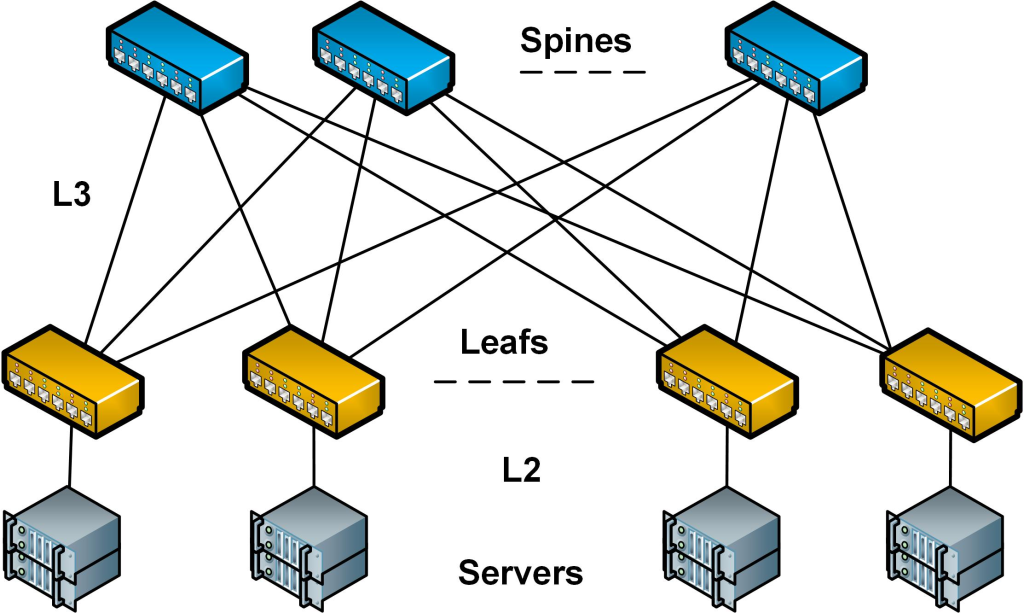
Leaf switches sit at the edge of the network fabric. These switches connect to endpoints, such as servers. This means every packet entering the fabric hits a leaf first. Each leaf then has uplinks to every spine, which creates multiple equal-cost paths.
Spine switches act as the high-speed transit layer between leaves. They do not connect to endpoints or form east-west adjacencies with other spines. This keeps the forwarding logic simple and predictable. A packet entering a leaf can take any spine to reach the destination leaf.
How Traffic Actually Flows
When a server sends traffic, it hits the local leaf switch first. The leaf checks where it needs to go and forwards the packet to one of the spines using ECMP. That’s Equal-Cost Multi-Path, which just means flows get split across all the available links, so you use all your bandwidth and get better throughput.
The spine receives the packet and forwards it down to the destination leaf. The destination leaf then delivers it to the endpoint. This creates a two-hop path in most cases: leaf-to-spine, then spine-to-leaf. This means latency is consistent across the whole fabric.
Why This Design?
Applications communicate with other services and the Internet. A three-tier network forces traffic through aggregation layers, which can create bottlenecks during peak loads. Leaf and spine configurations remove that bottleneck by giving every leaf equal access to the fabric. Most of this traffic is east-west traffic.
If you need more capacity, just add more spine switches. Each one bumps up the bandwidth between all the leaves, so the load gets spread out over more paths. Upgrades are as simple as dropping in more switches. This is especially handy in places running virtualization clusters, where network traffic patterns are always changing.
Where It Gets Complicated
Bandwidth oversubscription can still exist at the leaf layer. If a leaf has more server-facing bandwidth than uplink bandwidth, congestion can occur during traffic within the cluster. This becomes visible as greater latency or dropped packets under load.
Since every leaf connects to every spine, your port count and fiber runs go up as you grow the fabric. That means higher costs and more work when you add onto the setup. If you care about latency, even the extra cable length can start to matter.
What does this look like in practice?
You set up each leaf with uplinks to all the spines and advertise the connected subnets. This is usually done via a routing protocol such as BGP. Spines keep routing tables but don’t track endpoints beyond basic reachability. That way, if you lose a spine, you only lose some of the available paths, not the entire fabric.
A leaf-and-spine fabric provides horizontal scale within the fabric. It trades cabling complexity and routing discipline for consistent performance. One of those “simpler is better” concepts, if you look at it compared to the traditional three-tier design.
j2networks family of siteshttps://j2sw.com
https://startawisp.info
https://indycolo.net
#packetsdownrange #routethelight
Discover more from Justin Wilson (j2sw)
Subscribe to get the latest posts sent to your email.