
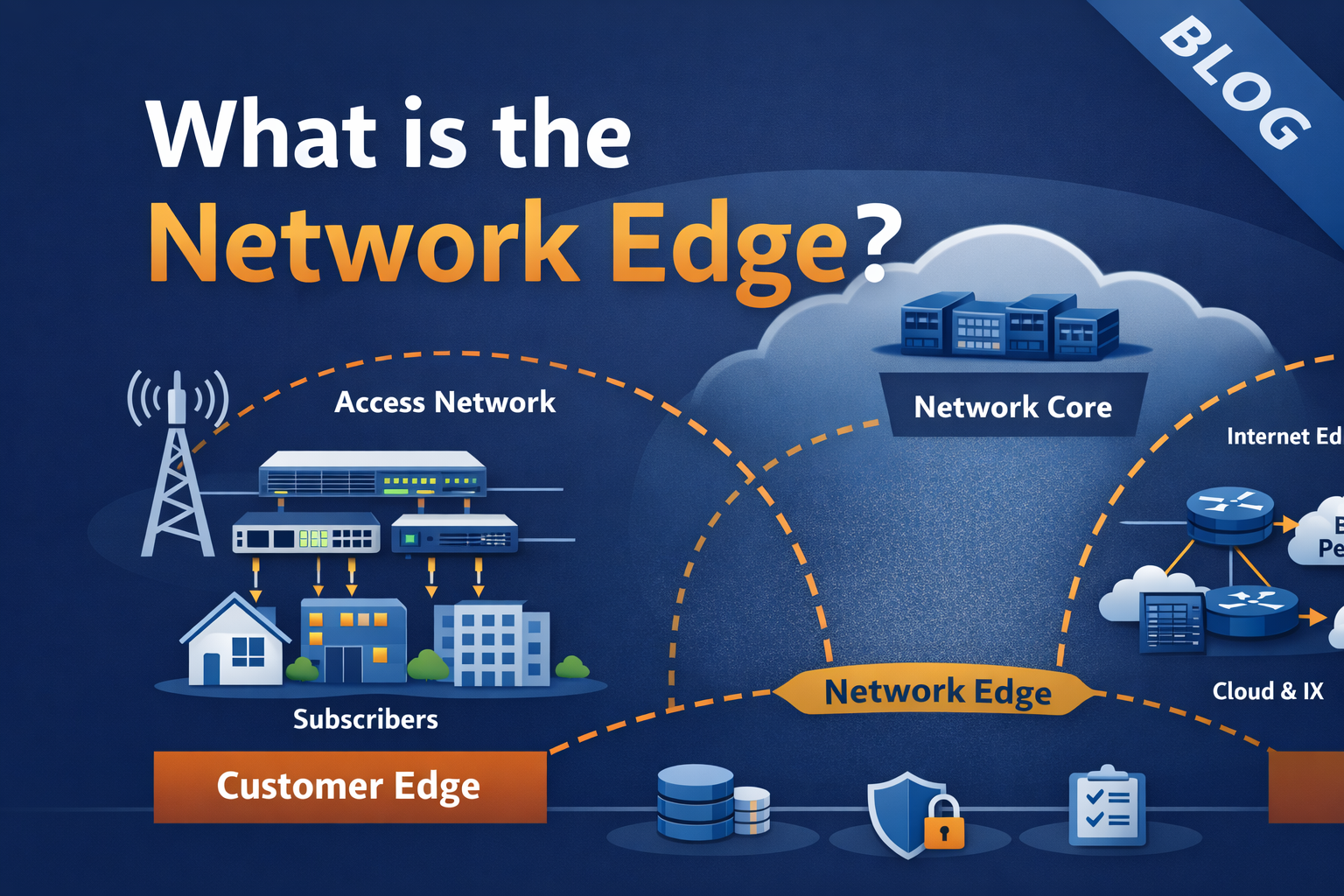
The network edge is one of those terms that sounds precise until you try to pin it down. Ask a few engineers where the edge is, and you will get a few different answers. They are usually all correct, just based on how their network is built and what problems they deal with day to day. The edge is not a box or a rack. It is the point where your network stops being fully under your control.
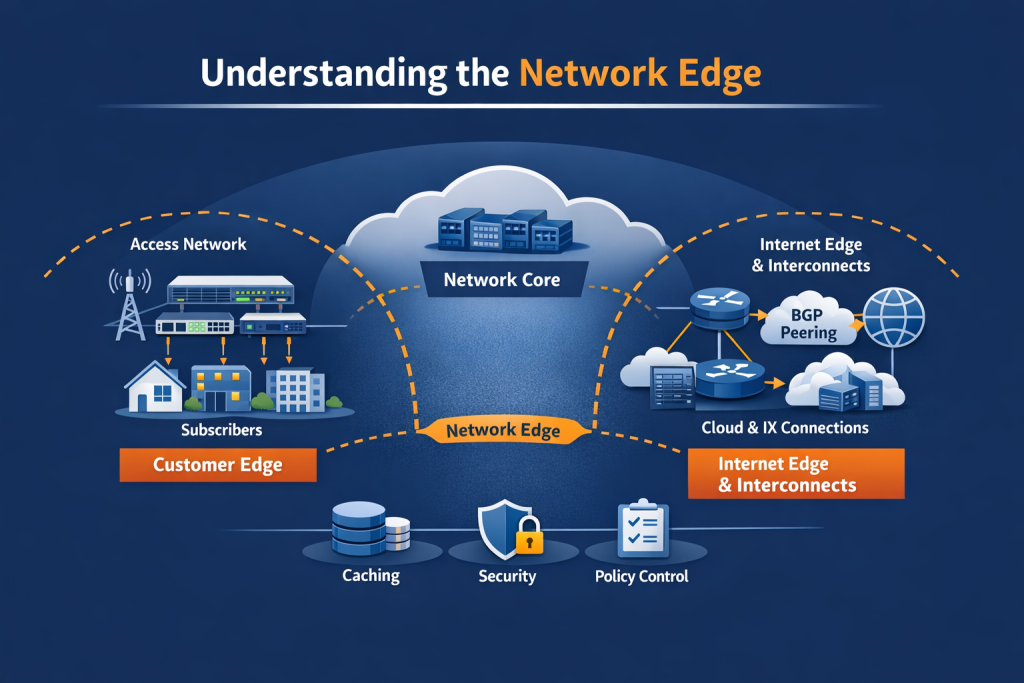
For most ISPs, the first version of the edge shows up where customers connect. This is your access layer. OLTs, CMTS, fixed wireless gear, and aggregation routers all live here. This is where sessions are initiated, addresses are assigned, and traffic enters your network for the first time. I personally consider this the access network, but the argument could be made that it is the customer-facing edge.
There is another edge that matters just as much: your Internet edge. This is where your network meets other networks. Border routers, BGP sessions, IX ports, and transit connections all live here. You decide what routes you accept and how traffic flows in and out of your network. The edge is the doorway into your network and must be treated as such.
As networks continue to evolve, the edge has picked up more responsibility. It is no longer only a handoff point to an upstream ISP. You now see content caching and compute workloads placed close to where traffic enters the network. Instead of dragging every packet back to a central data center, you handle it closer to the source. That lowers latency and saves on capacity. The edge is where security becomes a key design component. This is the first line of defense for your systems.
The discussion about the edge further complicates when you look at interconnection from a regional ISP perspective. If you are cross-connected to a cloud provider and sit on an exchange fabric, your edge might live in a facility you do not own. Traffic can enter your ASN, trigger a policy decision, and leave toward another network without touching your core. Connecting to different data centers further muddies the question of where your edge lives.
Operationally, the edge is where things can go sideways the fastest. You are dealing with customer devices, external routing policies, and networks you do not control. That means you need strong filters, a clear routing policy, and good visibility. The edge controls access to and from your network, so changes have to be carefully planned and thought out. Within your network, you have complete control. Have a bad customer? You can shut them down. At the edge, you start trusting inputs from systems you do not own. Good network design puts guardrails in place.
For years, the Cisco 3-tier model was always Core, Distribution, and Access. This is slowly getting redefined as more networks participate in the Capital I Internet. The 3-tier model still works, but adding an edge layer helps define the roles of devices and policies at those levels more clearly.
The edge is not shrinking. It is spreading out as networks push services closer to users. The edge is also gaining more intelligence. More things are happening here. If you cannot clearly define your edge, you will struggle to operate it. And when something breaks, that lack of clarity shows up fast.
j2networks family of siteshttps://j2sw.com
https://startawisp.info
https://indycolo.net
#packetsdownrange #routethelight
Discover more from Justin Wilson (j2sw)
Subscribe to get the latest posts sent to your email.